From the Principal Investigator
"Polymers shape the future, flight defies limits — both are bound by motion, innovation, and the art of mastering the unseen."
I strive for excellence in every endeavour, whether in the field of academics or the skies. My passion lies in unravelling the fundamental principles of Statistical Physics, particularly in the study of polymers and biopolymers. Just as aerodynamics governs flight, statistical mechanics unlocks the intricate behavior of polymeric systems, revealing their vast applications. I aim to push the boundaries of knowledge in Polymer Physics while embracing the discipline and precision of aviation — seeking to contribute through advanced research and a dynamic approach to both science and leadership.
Research


Semiflexible dendrimers
Analytical theory for how bond orientation, excluded volume and branching set the conformation and intramolecular relaxation dynamics of semiflexible dendrimers.
Randomly hyperbranched polymers
Conformational heterogeneity of hyperbranched macromolecules and its effect on rheology, transport dynamics, and association with nucleic acids.
Polymer-grafted nanoparticles
Mechanical and structural deformation of cross-linked polymer-grafted nanoparticles under varying solvent conditions — theory, simulation, and DFT for the electronic picture.
Applied electrochemical & functional polymer systems
The same toolkit extends into microbial fuel cells for wastewater treatment, conducting-polymer hydrogels for drug release, and photocatalytic composites.
Comb Polymers
Generalized branched (comb) polymer models — spanning branch functionality g and generation N — studied through theory and simulation, and compared against experimental comb and centipede polymer data.
Model architectures
Branching architectures g2N2 through g5N5 — tree diagrams showing how branch functionality (g) and generation/arm count (N) increase monomer density from sparse to comb-dense structures.
Shape parameter ρ
ρ = ⟨Rg²⟩¹ᐟ²/Rh versus number of monomers M, for Flexible, Semiflexible and Simulation models across all g2–g5, N2–N5 architectures, benchmarked against the self-avoiding, Gaussian and compact-model limits.
Fractal dimension Df
Fractal dimension Df versus number of monomers M — Semiflexible and Simulation models converge toward Df ≈ 3 (compact) faster than the Flexible model as branching increases.
Structure factor S(q)
Scattering structure factor S(q) versus scattering vector q (log–log), showing the characteristic power-law decay across all sixteen architectures.
Relaxation spectrum
Inverse eigenvalue spectrum 1/λᵢ versus normalized mode index i/M, for branch functionalities N = 2 to 5 — the plateau-and-drop pattern reflects the hierarchy of relaxation modes set by the branching architecture.
Comparison with experiment
log Rg versus log Mw for the group's comb-polymer (CoCP) models against experimental comb (CS25–35) and centipede (GS60–15, GS40–25, GS15–35) polymer data — the semiflexible model tracks the experimental trend most closely.
Segmental Dynamics of Comb Polymer Architecture
NMR relaxation (T1, T2, NOE), orientational autocorrelation, spectral density, order parameters and viscoelastic response of comb polymer architectures — theory (semiflexible, excluded-volume, and combined treatments) benchmarked against Brownian/BFM simulation.
NMR relaxation grid (1/T1, 1/T2, NOE)
Inverse relaxation times 1/T1 and 1/T2, and NOE, vs frequency, compared across four theoretical treatments (Semiflexible, Excluded-Volume, Semiflexible+Excluded-Volume, Simulation) for branch combinations g=2-5, N=3.
NMR relaxation: g2N3 vs g2N4
Same relaxation quantities isolated for the g2N3 and g2N4 architectures, comparing Semiflexible, Excluded-Volume, Semiflexible+Excluded-Volume theory against simulation.
Orientational autocorrelation P2(t)
Second-rank orientational autocorrelation function P2(t) decay over time, compared across the four theoretical treatments for g=2-5, N=3-4.
Spectral density J(ω)
Log-log spectral density J(ω) vs frequency, showing the theory-vs-simulation agreement across branch architectures.
Order parameter S²
Generalized order parameter S² vs branch generation N, for g=2 to g=5, comparing Semiflexible, Excluded-Volume and combined theory against simulation, with correlation coefficients shown.
P2(t) and J(ω): g2N3 vs g2N4
Combined view of orientational relaxation P2(t) and spectral density J(ω) for the g2N3 and g2N4 architectures.
Viscoelastic moduli G′, G″
Storage (G′) and loss (G″) moduli vs frequency for models g2N3 and g2N4, benchmarked against BFM simulation and, as a qualitative external reference (inset), experimental PI-comb polymer data.
Eigenvalue relaxation spectrum
log10(eigenvalue) vs log10(M/mode number k) for branch functionalities g=2-5 across N=2-5, with fitted power-law slopes shown for each g.
Education
Ph.D. in Theoretical Chemistry
M.Sc. in Physical Chemistry
B.Sc. (Hons) Chemistry
Positions held
Professor (Assistant), Jamia Millia Islamia
- Coordinator, SWAYAM & NEP Courses, Dept. of Chemistry (2024–present)
- Co-opted member, Dept. of Chemistry, JMI, for finalizing the course structure in light of NEP-2020 and revised JMI ordinance 15-B (XV-B), Academic (2024)
- Member, Syllabus Committee; Time Table & Workload Committee Incharge (2024–present)
- Computer Lab Incharge, Dept. of Chemistry (2021–present)
- Placement Coordinator, Dept. of Chemistry (2021–2024)
Professor (Assistant), Kalindi College, University of Delhi
- Advisory & Core Committee member, IQAC, Kalindi College (2014–19)
- Software support team, Student Management System (2015–19)
- Technical Committee Member, Online Admission Committee (2016–19)
- Discipline & Steering Committees for NAAC and undergraduate admissions (2014–18)
- Multiple organizing/registration/prize committees for Lehren Cultural Fest & Annual Day (2015–19)
- Golden Jubilee signage, invitations and logo design committee (2015–16)
Contribution to the corporate life of JMI
- Introduced Senior Division NCC Air Wing at Jamia Millia Islamia
- Established the first Smart Computer Laboratory, Dept. of Chemistry (2021)
- Facilitated placement of 13 students in a single recruitment drive as Placement Coordinator (2022)
- Proposed an application-based advanced course paper in the M.Sc. Chemistry curriculum (2022)
Academic achievements
- 2008Secured First Rank in the Ph.D. Entrance Examination, University of Delhi
- 2008Cleared JRF-NET Examination, CSIR-UGC
- 2016Shikshak Samman, Hindu Shiksha Samiti Nyas, Vidya Bharti Akhil Bhartiya Shiksha Sansthan Delhi
- 2022Guest Editor, special issue marking JMI's 100th anniversary, ChemistrySelect
- —Lifetime member, SPES & Biophysical Society of India
Research projects
Conformational heterogeneity of hyperbranched polymers and their association with nucleic acids
Mechanical & structural deformation of cross-linked polymer-grafted nanoparticles
Microbial Fuel Cell for laboratory wastewater treatment
Online software for internal assessment of students
PUBLICATIONS
Optical, Thermal, Mechanical, and Viscoelastic Properties of Conjugated Polymer Nanocomposites
Book chapter surveying the physical property landscape of conjugated-polymer nanocomposite systems.
Unraveling the Influence of Excluded Volume on Orientational Relaxation Dynamics in Dendrimers
Extends the group's dendrimer theory to isolate how excluded volume alone reshapes orientational relaxation.
A Theoretical Perspective on Segmental Relaxation Dynamics of Model Dendrimer
Builds a segment-level relaxation picture for model dendrimers beyond whole-molecule dynamics.
Analytical Model to Deduce the Conformational and Dynamical Behavior in Dendrimers: A Review
Reviews a decade of analytical models the group has built for dendrimer conformation and dynamics.
Electronic Properties of Polymer-Grafted Nanoparticles: A Density Functional Theory Study
DFT study of how grafted polymer chains alter the electronic structure of the nanoparticle core.
Kanamycin–Cu(II) Complex Catalyzed Ullmann Amine Synthesis at Room Temperature
A room-temperature catalytic route offering mechanistic insight into methylene blue degradation.
Investigating the Influence of Polymer Grafting on Nanoparticle Properties: A Comparative Study Across Diverse Systems
Compares how grafting density and chemistry reshape nanoparticle behaviour across several material systems.
Synthesis Techniques and Advance Applications of Spinel Ferrites: A Short Review
Surveys synthesis routes for spinel ferrites alongside their emerging functional applications.
Efficient Visible Light–Induced Photocatalytic Degradation of Tetracycline Hydrochloride
CuFe₂O₄ and PANI/CuFe₂O₄ nanohybrids degrade an antibiotic pollutant under visible light.
Microwave-Assisted Rapid Catalytic Degradation of Isoniazid Drug using Polythiophene/ZnFe₂O₄ Organic-Inorganic Hybrids
A microwave-assisted route speeds up catalytic breakdown of a tuberculosis drug residue.
Synthesis and Characterization of pH-Responsive Conducting Polymer/Na-Alginate/Gelatin Based Composite Hydrogels for Sustained Release of Amoxicillin Drug
A pH-responsive hydrogel platform designed for the controlled, sustained release of amoxicillin.
Electronic (E-waste) Conduct: Chemical Assessment and Treatment Methods
Assesses the chemical makeup of e-waste and reviews treatment methods for safe recovery.
Translational Transport of E-waste and Implications on Human Well-Being and the Environment
Traces how e-waste crosses borders and what that movement means for health and environment.
Synthesis and Characterization of Conducting Polymer/Alginate Composite Hydrogels: Effect on Release Behaviour of Metformin Drug
Examines how conducting-polymer loading tunes metformin release from an alginate hydrogel.
Recent Advances in the Utilization of Polyaniline in Protein Detection: A Short Review
Reviews how polyaniline-based sensors are being adapted for protein detection.
A Short Review on the Synthesis and Advance Applications of Polyaniline Hydrogels
Surveys synthesis strategies and application areas for polyaniline hydrogels.
Conducting Polymer-Based Micro- and Nano-batteries for Biomedical Applications: A Short Review
Reviews miniaturized conducting-polymer batteries designed for implantable biomedical use.
Microbial Fuel Cell: A Greener Way to Protect the Environment
Positions microbial fuel cells as a low-impact route to treating contaminated water.
Practical Scale Up Synthesis of Carboxylic Acids and Their Bioisosteres 5-Substituted-1H-Tetrazoles Catalyzed by a Graphene Oxide-Based Solid Acid Carbocatalyst
Demonstrates a scale-up-ready, graphene-oxide-catalyzed route to tetrazole bioisosteres.
Orientation and Behavioural Responses of Cotesia plutellae (Kurdjumov) (Hymenoptera: Braconidae) Towards Honey and Sucrose
Behavioural assay of a parasitoid wasp's orientation response to two sugar sources.
Dynamics of Dendrimers with Excluded Volume: A Comparison with Experiments and Simulations
Benchmarks the group's excluded-volume theory against experimental and simulated dendrimer dynamics.
Effect of Excluded Volume on the Rheology and Transport Dynamics of Randomly Hyperbranched Polymers
Shows how excluded volume reshapes rheology and transport in disordered hyperbranched polymers.
Intramolecular Relaxation of Flexible Dendrimers with Excluded Volume
Extends intramolecular relaxation theory from semiflexible to fully flexible dendrimers.
Orientational Relaxation in Semiflexible Dendrimers
Foundational theory linking bond semiflexibility to orientational relaxation in dendrimers.
Conformation and Intramolecular Relaxation Dynamics of Semiflexible Randomly Hyperbranched Polymers
Extends the dendrimer relaxation framework to disordered, semiflexible hyperbranched architectures.
Semiflexibility Induced Range of Conformations in Dendrimers
Shows how semiflexibility alone widens the accessible conformational range of a dendrimer.
Conformational Transitions in Semiflexible Dendrimers Induced by Bond Orientations
Traces how bond-orientation constraints drive conformational transitions in dendrimers.
Intramolecular Relaxation Dynamics in Semiflexible Dendrimers
Early theoretical treatment of intramolecular relaxation modes in semiflexible dendrimers.
Dynamics of Semiflexible Dendrimers in Dilute Solutions
The group's founding paper — semiflexible dendrimer dynamics in dilute solution.
News & highlights
New result on excluded-volume effects in dendrimer orientational relaxation, published in Physical Chemistry Chemical Physics.
Shelly Bhardwaj felicitated by the Vice Chancellor for the Prime Minister's Research Fellowship (PMRF) at JMI's 102nd Foundation Day.
Dr. Kumar served as Guest Editor for a special issue marking JMI's 100th anniversary in ChemistrySelect.
DST-SRG project on the conformational heterogeneity of hyperbranched polymers sanctioned — ₹28 Lakhs.
NCC — Air Wing
Dr. Kumar serves as an Associate N.C.C. Officer with the rank of Flying Officer, attached to No. 1 Delhi Air Squadron (Flying) under the Delhi Directorate of the National Cadet Corps.
- Associate N.C.C. Officer (ANO), rank of Flying Officer — No. 1 Delhi Air Squadron (Flying), NCC
- Delhi Directorate (DTE), Safdarjung Enclave, New Delhi–110042
- Introduced the Senior Division NCC Air Wing at Jamia Millia Islamia
View the 1 Delhi Air Squadron unit page — cadet roster, camps & achievements →
People

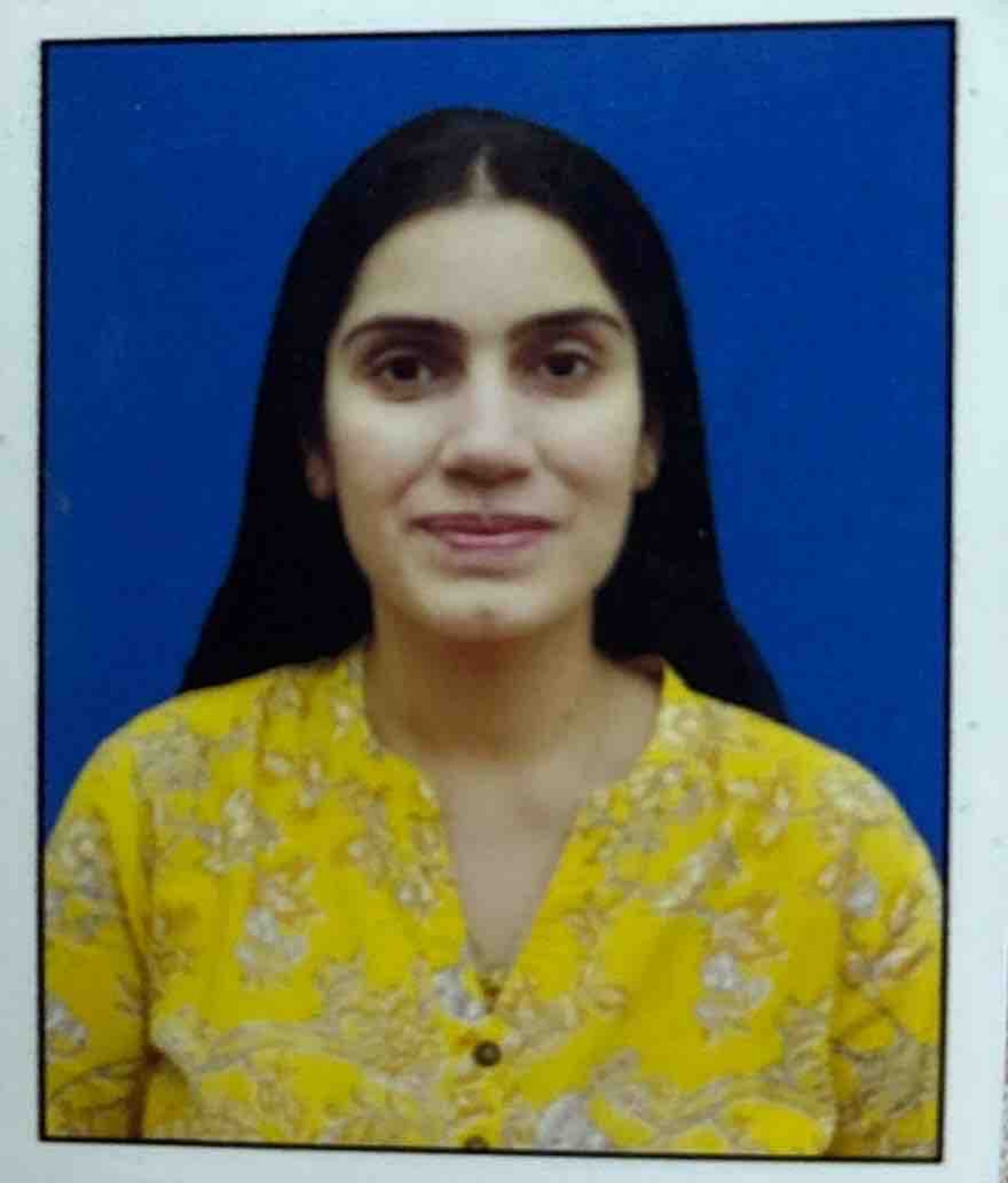

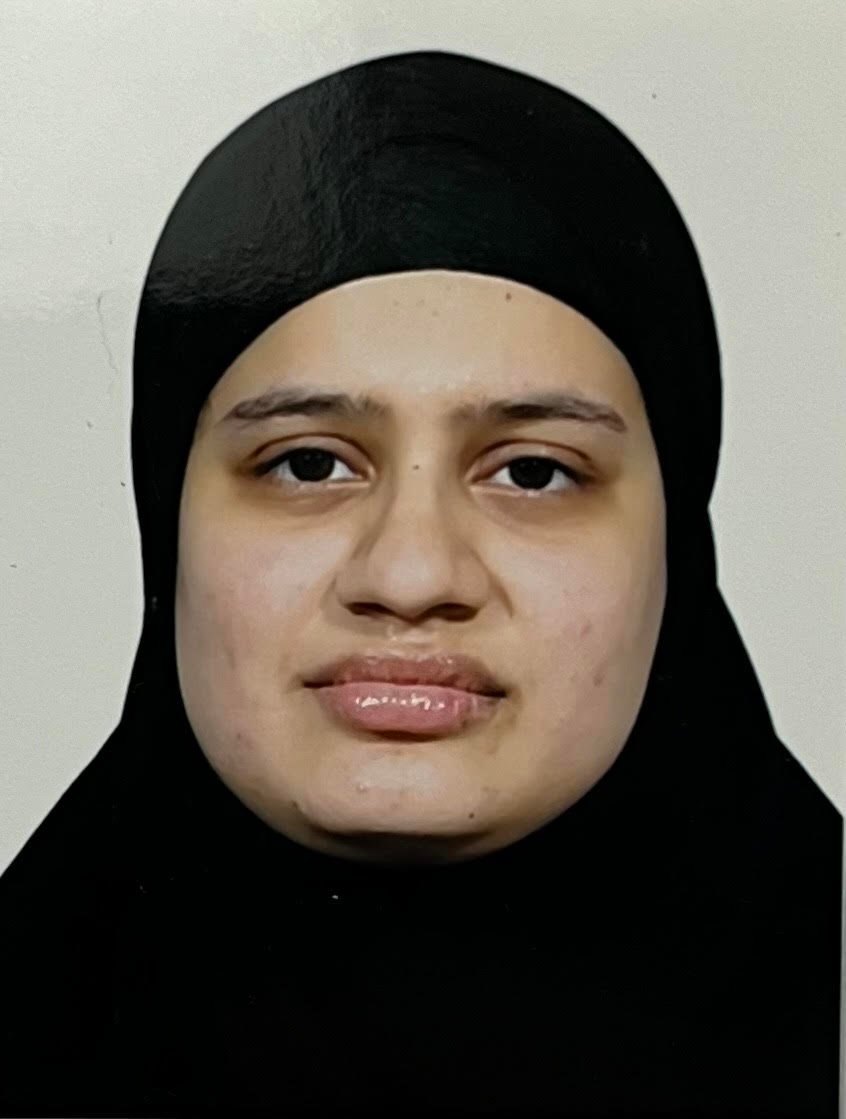


Flg. Offr. (Dr.) Amit Kumar
Ph.D. in Theoretical Chemistry, University of Delhi (2013), under Prof. Parbati Biswas, FNSc. Research interest: complex polymers, biopolymers, biophysics. PI on DST-SRG and UGC-BSR funded projects.
Shelly Bhardwaj
M.Sc. Chemistry, Deshbandhu College (Physical Chemistry specialization); B.Sc. (H) Chemistry, University of Delhi. Proposed research title: "A Generalized Theoretical Model to understand hyperbranched polymers and its impact on association with nucleic acid." Felicitated by the Vice Chancellor at JMI's 102nd Foundation Day (2022) for the PMRF, Lateral Entry Scheme.
Fareha Aslam
M.Sc. Chemistry, Jamia Hamdard University (Physical Chemistry specialization); B.Sc. (H) Chemistry, Jamia Hamdard University. Co-supervised via Jamia Hamdard University, New Delhi.
Sadia Shamsi
M.Sc. Chemistry, Jamia Hamdard University; B.Sc. (H) Chemistry, Jamia Hamdard University. Research title: "Computational considerations towards prebiotic chemistry: Urotropine and N-Protected amino acid towards the metal mediated C–N coupling catalysts." Co-supervised via Jamia Hamdard University, New Delhi.
Dr. Shayista Gaffar
M.Sc. Chemistry, Kashmir University; B.Sc. (H) Chemistry, Kashmir University (General Chemistry specialization). Ph.D. title: "Synthesis, Characterization and Photocatalytic Applications of Conducting Polymer/Ferrite Nanohybrids."
Dr. Aleena Mir
M.Sc. Chemistry, Jamia Millia Islamia; B.Sc. (H) Chemistry, Jamia Hamdard University. Ph.D. title: "Synthesis, characterization and applications of conducting polymer based hydrogels."
Dr. Ufana Riaz
Dr. Imran Ahmad Khan
M.Sc. students & interns
Each row is a self-contained block — copy one to add the next M.Sc. dissertation student or intern as they join. Add a photo the same way as above: images/<name>.jpg.
| Name | Program | Duration | Project |
|---|---|---|---|
| — | M.Sc. Chemistry | — | — |
| — | Summer Intern | — | — |
Academic courses
Under Graduate Course
- Molecular Modelling & Drug Designing
- Quantum Chemistry & Molecular Spectroscopy
- Phase Equilibria
- Application of Computational Methods in Chemistry
- Chemical Kinetics
- Ionic Equilibrium
- Electrochemistry and Electrochemical Cells
Post Graduate Course
- Advanced Physical Chemistry
- Advanced Statistical Mechanics
- Macromolecules & Surface Chemistry
- Irreversible & Statistical Thermodynamics
- Mathematical & Computational Methods in Chemistry
- Group Theory & Spectroscopy
Graduate (Pre-Ph.D.) Course
- Paper 1: Research Methodology
- Paper 2: Statistical Mechanics of Polymeric System & Complex Liquids
Computational skills
Gallery & Videos
Photo gallery
Add a photo by uploading a file with a matching name (e.g. images/gallery-1.jpg) next to this HTML file — it appears here automatically.


Videos
Add a clip by uploading a file named e.g. videos/clip-1.mp4 next to this HTML file — it plays here automatically.
Contact
Address
Jamia Millia Islamia
New Delhi–110025, India